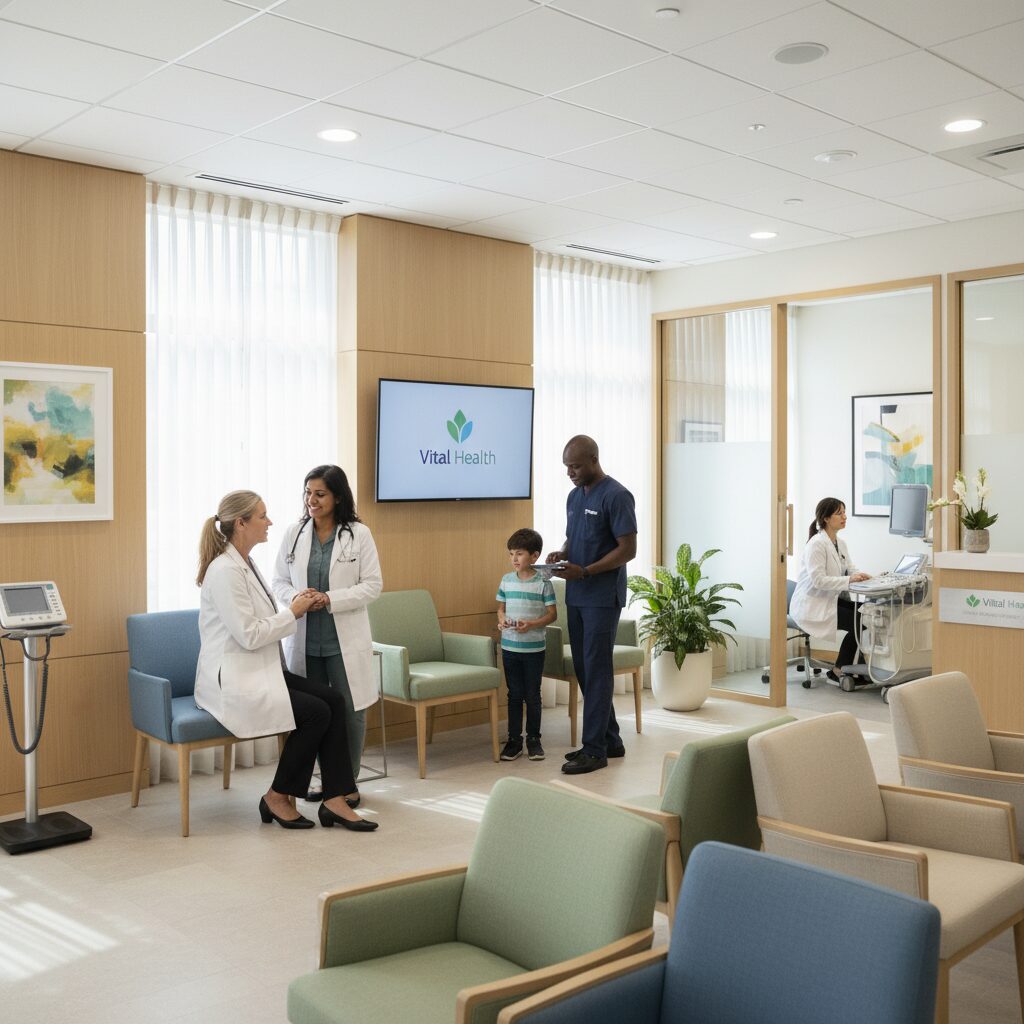

What is a sliding scale fee program
A sliding scale fee program adjusts the cost of healthcare services based on your income and household size. Instead of a one-size-fits-all price tag, clinics that offer a sliding scale apply a discount schedule to their standard fees. This means that if your earnings fall below certain Federal Poverty Guidelines (FPG), you pay less out of pocket for appointments, tests, and treatments.
By tying your charges to your ability to pay, sliding scale clinics remove one of the biggest barriers to accessing care. You won’t face surprise bills, and insurance gaps matter less when you can secure affordable primary care, behavioral health counseling, dental services, and more.
How sliding scale clinics determine your fee
Every sliding scale program follows a few core steps to calculate your fee. First, you provide documentation of your income—pay stubs, tax returns, or benefit letters. Then the clinic compares your earnings to the current FPG, which varies by household size and is updated annually by the U.S. Department of Health and Human Services.
Next, your income level places you in a discount class, each corresponding to a percentage of the full fee you’re expected to pay. Clinics define nominal charges (the minimum fees you actually pay) separately from co-pays or insurance deductibles to ensure clarity. Finally, you receive a personalized payment plan that outlines exactly what you owe at each visit.
A table example of how discount tiers often align with the Federal Poverty Guidelines is below:
| Income level (% FPG) | Discount pay class |
|---|---|
| Up to 100% | 100% discount (nominal fee, often $0–$30) |
| 101–150% | 50% of full fee |
| 151–200% | 75% of full fee |
| Over 200% | 100% of full fee (standard charges apply) |
This structure ensures transparency and helps you anticipate costs before your appointment. Health centers must also guarantee that the out-of-pocket charges under the sliding fee discount program do not exceed the discounted fee determined by their SFDS, even if your insurance co-pay is higher, provided it does not conflict with your plan’s terms [1].
Benefits of choosing a sliding scale clinic
Choosing a clinic with sliding scale options can save you money and reduce stress around healthcare expenses. Here’s how:
You pay what you can afford
Because fees adjust to your income, you avoid the often prohibitive costs of standard care.
You skip the insurance hassle
If you’re uninsured or underinsured, a sliding scale program stands in for coverage gaps. You focus on treatment instead of billing disputes.
You build a sustainable care relationship
Predictable, affordable payments encourage consistent visits—preventive care that leads to better long-term outcomes.
You maintain privacy and dignity
Nominal charges keep your costs low without requiring you to enroll in complex assistance programs or share more personal data than necessary.
These advantages combine to make sliding scale clinics an ideal option for anyone who struggles with high deductibles, fluctuating hourly wages, or family expenses.
Services often covered under sliding scale
Clinics tailor sliding fee programs to the services they offer. Common offerings include:
- Primary care visits and annual physicals
- Immunizations and wellness screenings
- Behavioral health counseling and psychiatry
- Dental checkups, cleanings, and basic restorative work
- Vision and optometry exams
- Family planning and reproductive health
- Chiropractic, acupuncture, and other holistic modalities
- Pharmacy services and prescription discounts
- Physical therapy and rehabilitation
Some Federally Qualified Health Centers extend sliding scale discounts to specialty services like dermatology or podiatry. Confirm with your clinic which departments participate in the program before scheduling.
How to find and verify a clinic with sliding scale
Locating a clinic with sliding scale options requires a few simple steps:
Search community health center directories
Federally Qualified Health Centers (FQHCs) typically provide sliding fee programs by law.Check clinic websites for “sliding scale” or “financial assistance”
You’ll often find eligibility forms and fee schedules posted online.Call the clinic’s billing or front-desk office
Ask specifically about their SFDS policies and the documentation you need.Compare accepted insurance and telehealth options
If you prefer virtual visits, you can verify via an insurance accepted telehealth clinic search to ensure you qualify for both sliding scale and telehealth discounts.Review transparency policies
Some clinics publish a primary care cost estimate or offer transparent pricing primary care pages that list full fees for services, making it easier to see your discounted rates.
When you find a candidate clinic, verify that it is also accepting new patients primary care and that the staff is ready to handle your clinic onboarding new patients smoothly.
Steps to enroll and start care
Once you pinpoint a sliding scale clinic, these steps help you begin:
Gather your income documentation
Collect recent pay stubs, benefit letters, or tax records that cover the required period.
Complete the sliding fee application
Some clinics let you fill out an online form, while others provide a paper packet at your initial visit.
Attend a financial counseling session
A billing specialist will review your paperwork, confirm your discount class, and answer any questions.
Schedule your appointment
You can typically call or use an online portal. If you need help with appointment reminders or rescheduling, ask about their patient portal or text alerts.
Make your nominal fee payment
Bring your payment method to the visit, knowing in advance what the minimum charge will be.
Keep your eligibility up to date
Sliding scale eligibility usually needs annual recertification. Mark your calendar or inquire about reminders to avoid lapses.
For detailed guidance on becoming a patient, consult our how to become a patient resource. When you’re ready, you can schedule primary care appointment directly.
Real-world examples of sliding scale programs
Looking at established programs can clarify how sliding scale works in practice:
Family Care Health Center (St. Louis, MO)
FCHC’s sliding fee discount program adjusts out-of-pocket costs based on household income aligned with 2025 Federal Poverty Guidelines. Their medical and optometry scales range from a $30 nominal fee to standard charges for higher incomes. They also offer specialized scales for family planning, pharmacy, dental, behavioral health, chiropractic, acupuncture, and physical therapy [2].
Howard Brown Health (Chicago, IL)
Howard Brown provides discounted services on a sliding scale for uninsured patients. Their fee is calculated as a percentage of the FPL and covers exams, vaccinations, and procedures. Patients living with HIV/AIDS may qualify for the Ryan White Program Sliding Fee Scale, which caps annual expenses and turns the rest of the year’s services free once you hit the federal limit [3].
Mat-Su Health Services (Alaska)
Mat-Su HCS develops its fees by calculating practice expenses, average visits, and local typical charges. Patients at or below the poverty level pay the minimum fee, with incremental increases for higher incomes. This model supports both insured and uninsured patients, potentially lowering copays below your insurance maximum [4].
Combining sliding scale with other payment options
Even with a sliding scale, you may still qualify for additional savings:
Use in-network benefits
If you have insurance, verify with an in network provider primary care to see if your copay or deductible can be reduced by the sliding scale policy.
Explore membership plans
Some clinics offer a membership primary care plan that bundles visits for a flat monthly fee, which, when combined with sliding scale, can make specialty care even more affordable.
Ask about payment plans
If you need to spread out larger expenses—like imaging or minor procedures—discuss healthcare payment plan options alongside your sliding scale discount.
Leverage telehealth
Virtual visits often cost less than in-office appointments. Confirm telehealth discounts via our telehealth insurance accepted guide.
Tips for maximizing savings with sliding scale
To get the most value from a sliding scale clinic, keep these strategies in mind:
Plan preventive visits ahead
Schedule your annual checkups and screenings before symptoms arise, when your discount applies most effectively.
Maintain accurate records
Submit updated income documentation promptly to avoid resets to full fees.
Compare fee schedules
If you see multiple sliding scale clinics, ask each for their SFDS policy. A small difference in nominal fees can add up over time.
Coordinate services
Bundling lab work, counseling, and follow-up visits on the same day may reduce administrative fees.
Discuss generic prescriptions
Clinics often stock lower-cost options in their pharmacy; request generics whenever possible.
Conclusion
By choosing a clinic with sliding scale fees, you take control of your healthcare budget without sacrificing quality. You benefit from transparent pricing, predictable out-of-pocket costs, and a personalized approach to care. Start by researching local health centers, gather your income documentation, and reach out to learn about their SFDS policies. When you’re ready, follow the steps to enroll and schedule primary care appointment. Affordable, high-quality care is within reach—one sliding scale clinic at a time.