
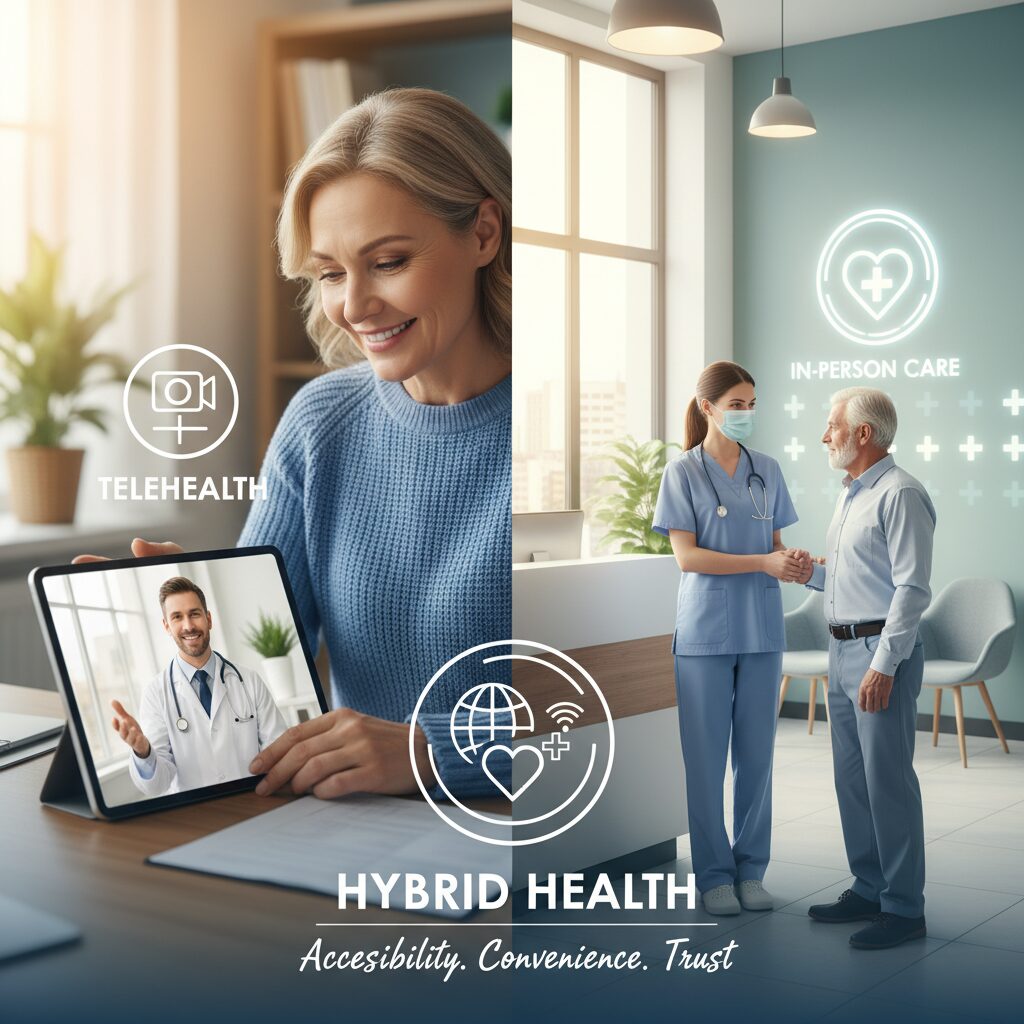
What a hybrid clinic model really means for you
When you see the phrase “hybrid clinic telehealth & in person,” it can sound like a technical term instead of something that directly affects your health. In reality, it describes how you access care, how often you see your doctor, and how easy it is to stay on top of your health without putting your life on hold.
A hybrid model combines in‑clinic visits with secure video or phone appointments so you and your care team can choose the right format for each concern. Nationally, telehealth use rose from roughly a quarter of patients in 2019 to as high as 60–90% during the early pandemic, largely because it made care more accessible and flexible [1]. Today, the most effective clinics have kept the best of both worlds and integrated telehealth into daily practice instead of treating it as a separate service.
At Vital Health, your care is designed around this hybrid approach. You get personal, in‑person relationships, with the ability to connect virtually when that is safer, faster, or more convenient.
How hybrid telehealth and in‑person care work together
In a true hybrid clinic, telehealth is not an add‑on or a temporary fix. It is part of your standard care plan. That means you and your provider intentionally decide which visits are better in the office and which are better online.
For example, you might come to the clinic for your annual physical, vaccines, and any visit that requires a hands‑on exam. Follow‑ups, medication checks, and routine chronic disease check‑ins can often be handled by video or phone. Federal guidelines describe this as a joint decision between you and your provider, focused on choosing the right mode for each visit instead of defaulting to one or the other [2].
You benefit most when your hybrid clinic has a clear workflow. Research shows that the clinics that do this best:
- Schedule telehealth visits right into normal provider schedules
- Convert last‑minute cancellations or no‑shows into same‑day telehealth
- Pair remote visits with coordinated in‑person exams or labs when needed
These simple steps help reduce no‑shows, improve access, and make it easier to keep your care on track [3].
Why hybrid care is safer than telehealth alone
Telehealth has many advantages, but it cannot replace every visit. Studies and expert reviews point to clear limits when clinics rely only on virtual care. Subtle changes in breathing, skin color, or body language can be missed on a screen, which increases the risk of misdiagnosis in complex cases [4].
Chronic conditions like diabetes, high blood pressure, and heart disease also require hands‑on assessments, lab work, and occasional diagnostic testing. Managing these issues through telemedicine alone is simply not enough for safe, thorough care [4].
A hybrid clinic model protects you from those gaps. You can use telehealth for routine concerns, quick questions, or follow‑ups, while still having easy access to in‑person exams when your provider needs to listen to your lungs, check your heartbeat, or examine a new symptom more closely. This combination has been shown to support better outcomes and higher patient satisfaction than digital‑only approaches, particularly for chronic disease management and mental health care [5].
Everyday scenarios where hybrid care helps you
The value of “hybrid clinic telehealth & in person” becomes very clear when you look at everyday situations.
You might:
- Have a busy workday and cannot take half a day off for a short medication follow‑up
- Live with a chronic condition and need more frequent check‑ins without constant travel
- Feel a new symptom and want a quick assessment to know whether you should come in
- Be caring for family members and need flexible options to coordinate multiple visits
Hybrid care lets you address all of these without sacrificing quality. National research shows that using both video and phone visits, along with in‑person care, improves engagement and helps reduce disparities in access across different ages, languages, and backgrounds [5].
For you, that means more ways to connect with your provider, fewer missed appointments, and less time sitting in waiting rooms for issues that can be handled remotely.
What you can expect from Vital Health’s approach
When you choose a hybrid clinic, you are not just choosing technology. You are choosing a way your care team works with you. At Vital Health, that includes:
- Thoughtful scheduling that blends in‑person and virtual visits
- Clear guidance on which concerns are appropriate for telehealth
- Smooth transitions from telehealth to in‑office visits if something needs a closer look
- A consistent team that knows your history and preferences
Hybrid models that integrate telehealth directly into daily clinical workflows have been shown to reduce cancellations and no‑shows, improve continuity, and even prevent unnecessary emergency department visits by providing quick remote assessments when people are acutely worried [3]. That is the kind of reliable access you want from a trusted healthcare home.
Better access for you and your family
Access is one of the clearest ways a hybrid clinic benefits you. During the pandemic, telehealth made it possible for people in rural communities, those without easy transportation, and those juggling work and caregiving to continue receiving care. In many areas, clinics that adopted hybrid care were able to extend hours, add appointment options, and expand access for people who might otherwise have gone without care [1].
With a hybrid model you can:
- Schedule early morning or later‑day virtual visits that fit your schedule
- Avoid unnecessary travel when you are feeling unwell
- Get follow‑up care after a hospital stay without another trip right away
- Share home blood pressure or glucose readings through remote monitoring, when available
Some health systems now use remote monitoring to track vital signs at home for conditions like high blood pressure, heart failure, and COPD. Patients send data to their care team, who can adjust treatment early and help prevent complications [6]. When you pair that kind of technology with in‑person exams and testing, you get a more complete picture of your health between visits.
If you are comparing options and looking for the best primary care clinic near me, it is worth asking each clinic how they use telehealth and how that affects access for you.
Stronger continuity and long‑term relationships
Continuity of care means you are not starting over with a new provider every time. It also means your care does not get interrupted when your life gets busy. Hybrid clinics that integrate telehealth into routine practice have been able to maintain steady telehealth use at around 10% of total visits even after the pandemic peak, which supports ongoing access and follow‑up [3].
For you, continuity shows up when:
- You see the same provider virtually and in person
- Your medical record reflects all of your visits, regardless of format
- Your care team follows up after urgent issues, hospital stays, or new diagnoses
- Your preferences about visit type are noted and respected
If long‑term relationships and stable follow‑up matter to you, consider a clinic that emphasizes being a continuity of care provider and an integrated care provider. A hybrid model supports that promise because it gives your team more ways to stay connected with you between annual visits.
Why bedside manner still matters in a hybrid world
Technology should not erase the human side of medicine. A video or phone visit can either feel rushed and impersonal or calm and attentive. The difference is the bedside manner of your provider and staff.
Hybrid clinics that invest in good communication, clear explanations, and empathetic listening build trust whether you are on screen or sitting in an exam room. Research on hybrid mental health care has shown that clinics which add dedicated support roles for digital tools can actually lightening clinician workload and improve patient engagement and satisfaction [5]. That frees your provider to focus on you, not the technology.
As you evaluate clinics, look for signs that patient experience is a priority. Independent patient testimonials clinic pages and a reputation as a high patient satisfaction clinic are useful indicators that bedside manner matters just as much online as in person.
Hybrid care for complex and chronic conditions
If you are living with a chronic illness, you might be wondering whether hybrid care can really support more complex needs. Current evidence suggests that it can, when it is blended intentionally with in‑person visits.
For example, a 2024 study of people with type 2 diabetes found that combining in‑clinic visits with continuous remote monitoring led to meaningful improvements in HbA1c levels. Patients with higher baseline levels saw the greatest benefits, which suggests that hybrid care can be especially helpful for those who are struggling most with control of their condition [5].
Hybrid models have also been used for hospital‑level care at home, with virtual physician oversight and in‑person nursing, lab, and radiology services. One large program reported a 0% in‑program mortality rate and very low 30‑day readmission and mortality rates, showing that even high‑acuity care can be delivered safely through a carefully designed hybrid approach [7].
While your primary care needs will not usually require hospital‑level home care, the same principles apply:
- Use telehealth to check in more often without burdening you with travel
- Monitor key health data between visits when appropriate
- Bring you into the clinic for targeted exams, labs, and imaging
- Coordinate with specialists as needed to keep your care connected
Clinics that emphasize being a quality primary care practice or integrated care provider are typically more prepared to use hybrid tools in this coordinated way.
How Vital Health differentiates its hybrid care
Many clinics now advertise telehealth. Fewer have taken the time to build a true hybrid system that feels smooth on your end. When you compare options, it can help to ask a few specific questions:
- Is telehealth part of your regular schedule, or only offered in special situations?
- How do you decide when I need to be seen in person?
- Can you convert a same‑day cancellation into a telehealth visit?
- How will my information from virtual visits be shared with the rest of my care team?
A clinic that can answer those clearly is more likely to deliver the type of hybrid care you expect from a top rated telehealth provider. If they also emphasize their role as a trusted family doctor clinic and trusted healthcare home, you can feel more confident that continuity, not just convenience, is at the center of their approach.
When telehealth is built into a compassionate, relationship‑driven primary care setting, it does not replace your doctor. It makes your doctor more reachable, more often, without sacrificing the quality of in‑person exams.
That blend of accessibility and thoroughness is what separates an average practice from an award winning clinic or premium primary care experience.
What this means for your long‑term relationship with your clinic
Over time, hybrid care can change how you experience primary care. Instead of viewing visits as rare, disruptive events, you can see your clinic as a steady partner that fits into your life.
With a well‑run hybrid model you are more likely to:
- Stay engaged in preventive care and screenings
- Follow through on chronic disease plans
- Reach out early when something feels off
- Maintain a long‑term relationship with your care team
Clinics that successfully retain patients year after year usually do so by combining strong clinical quality with consistent communication and easy access. If you value that kind of stability, look for a retained patients clinic that openly shares its clinic differentiators primary care and highlights its focus on you as an individual, not just on visit counts.
A smaller, boutique primary care provider model may also appeal to you if you appreciate a more personalized, less rushed feel to both in‑person and telehealth visits.
Deciding if a hybrid clinic is right for you
Ultimately, choosing a hybrid clinic is about deciding how you want to access care, how you want your provider to know you, and how much flexibility you need as your life and health change.
If you want:
- Flexible access without sacrificing safety
- Consistent relationships with a team that knows your story
- Thoughtful use of technology that supports, not replaces, human care
- A practice that pays attention to patient experience and satisfaction
Then a hybrid clinic that blends telehealth and in-person visits is likely a strong fit. When you combine that model with the focus on quality, continuity, and bedside manner that defines a quality primary care practice, you get more than convenience. You get a long-term partner in your physical and mental health care.
