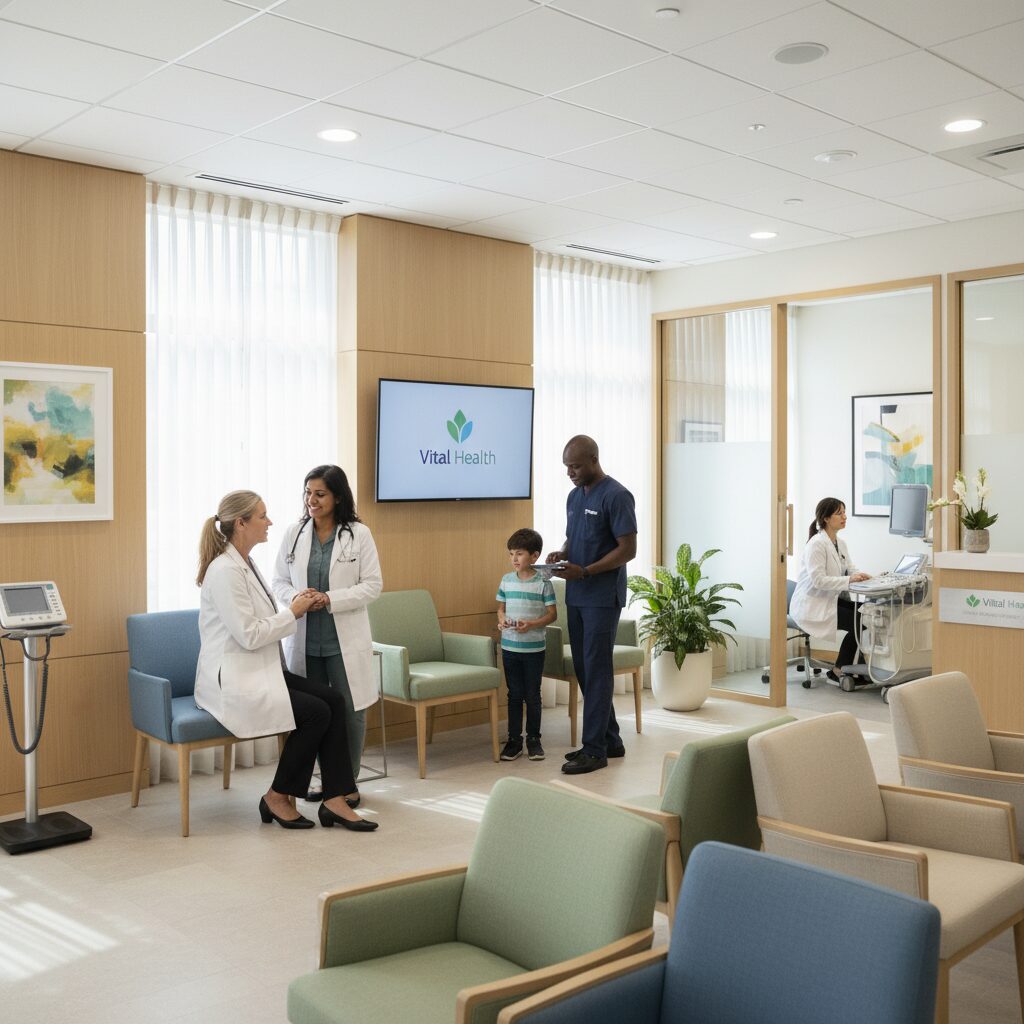

What a continuity of care provider really means for you
When you choose a continuity of care provider, you are not just picking a clinic for your next appointment. You are establishing an ongoing relationship with a team that understands your history, coordinates your treatments, and stays with you through every stage of your health journey.
In healthcare, continuity of care means you see the same physician or tightly coordinated care team over time, with accurate information and a consistent, long term plan guiding your treatment. Studies show that sustained continuity of care is associated with higher quality care, better preventive services, and fewer emergency visits and hospitalizations [1].
When you are comparing options and looking for the best primary care clinic near me that actually delivers on its promises, understanding the benefits of continuity can help you decide where you will feel most supported and secure.
How continuity of care improves your health
Continuity of care is not a buzzword. It is a care model with measurable effects on outcomes, satisfaction, and costs.
Better outcomes and fewer emergencies
When you work consistently with the same primary care provider or well coordinated team, your doctor sees patterns that a one time visit might never reveal. Over time, that familiarity leads to more appropriate treatment decisions and earlier intervention.
A large review of primary care studies found that strong continuity of care reduced hospitalizations and emergency department visits, with no evidence of harm to quality of care [2]. A Canadian study of more than 95,000 older adults found that patients with high continuity of care had significantly fewer emergency room visits than those with low or no continuity [3].
For you, that means:
- Fewer urgent care and ER trips for issues that could have been managed earlier
- Less disruption to your work and family life
- More care in familiar settings instead of in crisis environments
Another multi country study found that patients who saw the same provider consistently had an 81.8% reduction in mortality compared to those without continuity [4]. This type of long term relationship can literally be life extending.
Stronger prevention and chronic disease control
A continuity of care provider does more than treat today’s complaint. They track your health over time and make sure critical preventive care is not missed.
Evidence shows that sustained continuity improves the receipt of preventive services, particularly for conditions like asthma and diabetes [2]. That translates into:
- More reliable screening for cancers, heart disease, and metabolic issues
- Better monitoring of blood pressure, blood sugar, and cholesterol
- Earlier course corrections when a condition starts to worsen
For chronic conditions, continuity is especially important. You benefit from a physician who knows what has worked for you in the past, understands your lifestyle and preferences, and can adjust your plan in a coordinated way instead of starting from scratch with each new visit.
A more efficient healthcare experience
Continuity of care also improves efficiency for you and for your providers. When your information is accurate and accessible across visits and settings, your team can spend less time repeating questions and more time on decision making.
Research highlights that continuity of care reduces duplicated work and prevents errors by ensuring timely access to accurate documentation and care plans [4]. For you, that means fewer:
- Repeated tests
- Conflicting recommendations
- Miscommunications between specialists and your primary care team
You feel the difference in every appointment. You spend less time re telling your story and more time focusing on what you want to improve next.
The three types of continuity that matter
When you evaluate a continuity of care provider, it helps to understand that continuity operates in three interconnected ways. You benefit most when all three are in place.
Relational continuity: A trusted, ongoing relationship
Relational continuity is the ongoing therapeutic connection between you and your primary clinician. It is the feeling that this doctor or team knows you, respects your goals, and will still be there months and years from now.
Studies describe these relationships as being defined by trust, loyalty, and constancy, and link them to better physical, emotional, and mental health outcomes [5]. Patients with strong relational continuity report feeling understood and prioritized, and they spend less time explaining their history at each visit [4].
In a high quality primary care setting, you are not just a chart. You are someone your clinician expects to see again, with shared plans and expectations.
Informational continuity: Your story, accurately captured
Informational continuity is about how well your medical story follows you. It means your providers have up to date information about your diagnoses, medications, allergies, test results, and preferences, and can access that information when you are seen in clinic, during telehealth, or at another facility.
When informational continuity breaks down, providers in different locations can struggle to access your records [6]. That can lead to delays, repeated tests, and even mistakes.
A continuity of care provider invests in systems and processes so your information is:
- Complete and accurate
- Shared across your care team
- Available during in person and virtual visits
This is also where thoughtfully used technology, including AI tools, can help. Platforms like Heidi have shown how digital systems can simplify documentation and support continuity across millions of consultations weekly [4].
Management continuity: A coordinated plan over time
Management continuity means your care plan is consistent and coordinated, even as your health evolves and new specialists become involved. Your primary care provider acts as your anchor, helping to align recommendations so you are not left with conflicting instructions.
Research in primary health care emphasizes that management continuity requires clear roles, follow up scheduling, and coordinated planning meetings when multiple organizations are involved [7].
For you, this looks like:
- A clear, written understanding of next steps
- One main provider making sure new advice fits your overall plan
- Help prioritizing what matters most right now
When you choose a continuity focused practice, you are choosing this kind of long view, not just one off fixes.
Why continuity is getting harder to find
If continuity of care is so beneficial, you might wonder why it seems harder than ever to experience. The reality is that many healthcare systems are moving in the opposite direction, toward fragmentation.
In recent years, fewer adults in the United States report having a personal physician as their usual source of care. That number declined from 84% to 74% from 2000 to 2019 [8]. At the same time, large health systems and urgent care chains have made it easier to get quick access, but often at the cost of ongoing relationships.
Researchers note that fragmentation, physician shortages, and complex systems can reduce opportunities for continuity [3]. This is why it is important for you to look for providers that specifically commit to continuity and build their model around it.
Policy changes are slowly starting to recognize the value of continuity. For example, in 2024, the Centers for Medicare and Medicaid Services introduced a new billing code to help support primary care services that involve continuity and ongoing complexity management, increasing reimbursement for these visits [8]. However, it still falls to you to select a clinic that truly prioritizes this approach in daily practice.
Continuity in a hybrid, telehealth plus in clinic world
You may be wondering how continuity of care fits with modern, hybrid care models that combine telehealth and in person visits. The good news is that, in the right hands, virtual care can actually strengthen continuity rather than weaken it.
During the COVID 19 pandemic, telemedicine and digital health tools became critical for maintaining continuity of essential services. Remote consultations, tele monitoring, and virtual clinics helped patients manage chronic conditions and access mental health support without in person visits [9].
When you choose a hybrid clinic telehealth & in person, you can benefit from:
- Seeing the same clinicians virtually and in person
- Flexible scheduling that fits around work and family
- Quicker follow up for lab results, medication questions, and new symptoms
The key is integration. A true continuity of care provider will make sure your telehealth visits are documented in the same record as your office visits, and your primary clinician remains the point of connection across both formats. If you also value access and convenience, you may want to combine this with a top rated telehealth provider that is built for ongoing relationships, not just one time urgent care.
What to look for when evaluating a continuity of care provider
As you compare clinics and providers, you can use continuity as a practical lens. You are not just looking for a name on your insurance list, you are looking for a trusted healthcare home that stays with you over time.
Here are key signals to consider:
Evidence of long term patient relationships
Continuity shows up in how long patients stay and how they describe their experiences. Look for:
- Strong reviews from long standing patients
- Stories that mention feeling known and listened to
- Clear commitment to follow up and ongoing management
A high patient satisfaction clinic or retained patients clinic often reflects a culture centered on continuity and trust, not just throughput. You can also explore a provider’s patient testimonials clinic page to see how real people describe their relationships with the care team over time.
Coordinated, team based primary care
Continuity does not always mean you must see one individual doctor for every visit. In high quality primary care, smaller teams can share continuity, especially when systems are in place for communication and documentation.
Research from Swedish primary care shows that working in smaller, stable teams can preserve relational continuity even in complex, fragmented systems [6]. Interprofessional collaboration across physicians, nurses, pharmacists, and allied health professionals also improves outcomes when it is deliberate and well coordinated [5].
When you evaluate a quality primary care practice or integrated care provider, look for:
- Clear care team structure and named primary clinician
- Shared access to your record across the team
- Regular case review or care coordination processes
Hybrid access that does not compromise relationships
Access is only helpful when it supports consistency. As you consider options like a boutique primary care provider or premium primary care experience, ask how telehealth and in person visits are integrated.
A continuity focused hybrid clinic should:
- Offer routine and follow up visits via telehealth with your established clinician
- Reserve in person visits for preventive care, exams, and issues that require hands on assessment
- Keep all notes and plans in a single, shared record
This kind of structure allows you to enjoy the flexibility of modern care without losing the stability of a long term provider.
How a continuity focused clinic differentiates itself
When you are weighing multiple options, continuity can be one of the clearest differentiators. It shapes everything from scheduling to bedside manner.
A clinic that truly values continuity will usually demonstrate:
- Longer, more focused visits that prioritize listening and shared planning
- Strong emphasis on preventive care and early intervention
- Thoughtful follow up, not just one time problem solving
If you are comparing a general practice with a more tailored trusted family doctor clinic or trusted healthcare home, consider which one:
- Encourages you to see the same clinician or small team
- Tracks and reviews your history in detail at each visit
- Proactively reaches out about screenings, vaccinations, and chronic disease checks
Clinics that win awards or recognition often stand out partly because of their continuity. An award winning clinic typically demonstrates consistent quality metrics, strong patient experience scores, and effective long term management of populations, all of which depend on continuity.
If you want a quick way to frame your decision, you can think in terms of differentiators:
A continuity of care provider is not just somewhere you can be seen quickly, it is somewhere you can be known deeply.
Resources like clinic differentiators primary care can help you compare how different practices approach these core elements and what that will mean for you day to day.
Putting continuity to work for your own health
Ultimately, the benefits of a reliable continuity of care provider show up in very personal ways. You feel safer making decisions because you trust the guidance you receive. You spend less time navigating the system and more time focusing on what you want to do with your health.
When you select a continuity focused practice, you can expect:
- A clear main point of contact for your medical questions
- A relationship that deepens over time, rather than starting from zero at each visit
- Hybrid access through telehealth and in person care that supports your schedule
- Proactive attention to prevention, chronic conditions, and mental health
As you look for the best primary care clinic near me, keep continuity front and center. Choosing a provider that is structured around long term relationships, integrated information, and coordinated plans does more than simplify your next appointment. It shapes the quality, safety, and stability of your care for years to come.